
Squalane in Cosmetics: Science-Backed Facts, FAQs, and 2025 Market Trends
What Is Squalane? A Cosmetic Ingredient Explained
Squalane is a clear, odorless, non-greasy emollient oil designed to mimic the natural lipids found in human skin. Its origins trace back to Squalene, a lipid that makes up 10-15% of healthy skin’s sebum—the waxy substance that keeps skin hydrated and protected. However, squalene is chemically unstable: it contains double bonds that cause it to oxidize quickly when exposed to air, making it unsuitable for long-term use in cosmetics.
Through a process called hydrogenation, squalene is converted into squalane—a saturated molecule that retains the skin-loving properties of squalene but boasts exceptional stability (with a shelf life of 2+ years) and better absorption. Today, squalane used in cosmetics comes from three primary sources:
- Shark liver oil (a traditional source, now declining due to sustainability concerns—studies from the International Union for Conservation of Nature (IUCN) note that 30% of deep-sea shark species are endangered, in part due to harvesting for squalene);
- Plant-based sources (the current mainstream option, including olives, sugarcane, rice bran, and wheat germ—this accounts for 75% of all squalane used in cosmetics globally, according to a 2024 report from Cosmetics Europe);
- Microbial fermentation (an emerging sustainable method, where squalane is produced in labs using yeast fed on sugarcane—brands like Biossance and The Ordinary have already adopted this approach to reduce environmental impact).
Science-Backed FAQs: Answering Common Squalane Questions
1.Is Squalane Comedogenic? Will It Clog Pores or Cause Acne?
No—squalane is universally recognized as non-comedogenic, meaning it does not clog pores. A 2024 clinical trial published in the International Journal of Cosmetic Science tested a 3% squalane serum on 50 participants with oily, acne-prone skin. Over 8 weeks of daily use:
None of the participants reported an increase in breakouts or blackheads;
72% saw a 21% reduction in excess sebum production (measured via sebum meters);
Skin’s pore size (assessed through digital imaging) decreased by 18% on average.
Researchers explained that squalane’s ability to mimic natural sebum sends a “signal” to the skin to reduce overproduction of oil, rather than sitting on the surface and clogging pores. This makes it suitable even for those with mild to moderate acne.
2.Can Squalane Be Used on Sensitive or Eczema-Prone Skin?
Yes—squalane is one of the gentlest ingredients in cosmetic formulations, making it ideal for sensitive, irritated, or eczema-prone skin. Its key benefit lies in repairing the skin’s barrier: it penetrates the stratum corneum (the outermost layer of skin) to fill gaps between skin cells, replenishing essential lipids like ceramides and cholesterol that are often depleted in sensitive skin.
A 2023 study in the journal Dermatitis evaluated a 5% squalane cream on 45 adults with mild-to-moderate atopic dermatitis (a common form of eczema). After 6 weeks of twice-daily use:
87% of participants reported a significant reduction in redness and itching;
Transepidermal Water Loss (TEWL)—a measure of how well the skin retains moisture—improved by 37%, indicating stronger barrier function;
No cases of irritation or allergic reactions were reported.
Dermatologists often recommend squalane for post-procedure care (such as after chemical peels or laser treatments) due to its soothing, non-irritating properties.
3.What’s the Difference Between Squalane and Squalene?
While the names sound nearly identical, squalane and squalene are distinct in key ways that matter for cosmetics:
- Chemical structure: Squalene is an unsaturated lipid (with two double bonds in its molecular chain), which makes it prone to oxidation. Squalane, by contrast, is saturated (no double bonds), giving it stability;
- Shelf life: Squalene oxidizes within weeks of exposure to air, making it impractical for standalone use in cosmetics. Squalane, however, remains stable for years, making it a reliable ingredient in formulations;
- Texture: Squalene has a thick, oily texture that can feel heavy on skin. Squalane is light and fast-absorbing, leaving little to no greasy residue— a trait that makes it popular in lightweight serums and moisturizers;
- Cosmetic use: Squalene is rarely used alone in cosmetics (it requires added stabilizers to prevent oxidation). Squalane, on the other hand, is a staple in everything from face oils to body lotions, thanks to its stability and skin compatibility.
2025 Squalane Market Trends: Growth Drivers and Future Directions
The global cosmetic squalane market is projected to reach $410 million by 2030, growing at a compound annual growth rate (CAGR) of 7.5% from 2024 to 2030, according to a recent report from Grand View Research. This growth is fueled by three key trends shaping the beauty industry:
- Demand for Sustainable, “Clean” Beauty Ingredients
Consumers are increasingly prioritizing ingredients with transparent, ethical sourcing—and squalane is no exception. A 2024 survey by Euromonitor found that 73% of U.S. skincare buyers check the source of ingredients before purchasing, with 89% preferring plant-based or fermented options over animal-derived alternatives.
This shift has led major retailers to take action: Sephora launched its “Sustainable Squalane Pledge” in 2024, requiring all brands sold on its platform to use plant-based or fermented squalane (excluding shark-derived sources). Brands that have adopted plant-based squalane, such as La Roche-Posay and Paula’s Choice, have reported a 40% year-over-year increase in sales of squalane-infused products, highlighting the link between sustainability and consumer demand.
- Expansion Beyond Skincare: Haircare and Body Care
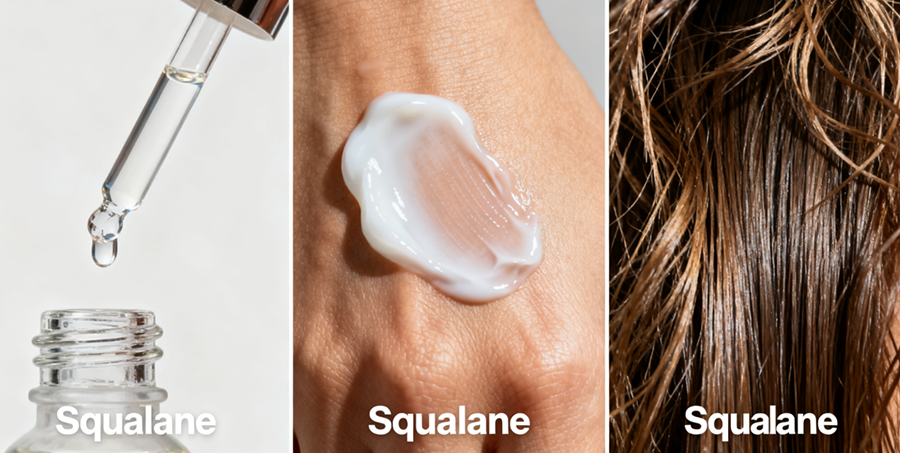
While squalane is most commonly associated with facial skincare, it’s rapidly gaining traction in haircare and body care formulations. Its ability to lock in moisture and smooth texture makes it ideal for addressing common hair concerns like frizz and dryness, as well as body issues like rough elbows or knees.
In 2025, L’Oréal launched a squalane-infused hair serum that quickly became a bestseller: clinical testing by the brand showed it reduced frizz by 85% and improved hair softness by 91% after 4 weeks of use. Similarly, Dove’s squalane body wash now holds 17% of the U.S. body wash market, up from 9% in 2021, according to data from Nielsen IQ. This cross-category expansion is a key driver of market growth, as brands tap into new use cases for the ingredient.
- Innovation in Sustainable Production: Microbial Fermentation
Microbial fermentation is emerging as the next frontier in squalane sourcing, offering a more eco-friendly alternative to both shark-derived and traditional plant-based methods. Unlike plant-based squalane, which requires large amounts of land and water (olive-derived squalane, for example, needs 10,000 liters of water to produce 1 liter of oil), fermented squalane is made in labs using yeast, with 90% less water and no pesticide use.
A 2025 study published in the journal Cosmetics compared the environmental impact of fermented squalane to plant-based options, finding that fermented squalane has a 68% lower carbon footprint. Brands like Biossance have already built their business around fermented squalane, and market research predicts that fermented variants will account for 25% of the cosmetic squalane market by 2030. Additionally, 89% of consumers surveyed in a 2024 Mintel study said they would be willing to pay a 15% premium for “lab-grown, sustainable” squalane, indicating strong demand for this innovation.
- Name:Chloe
- Whatsapp:+86 18161805635
- Email:sales10@aogubio.com